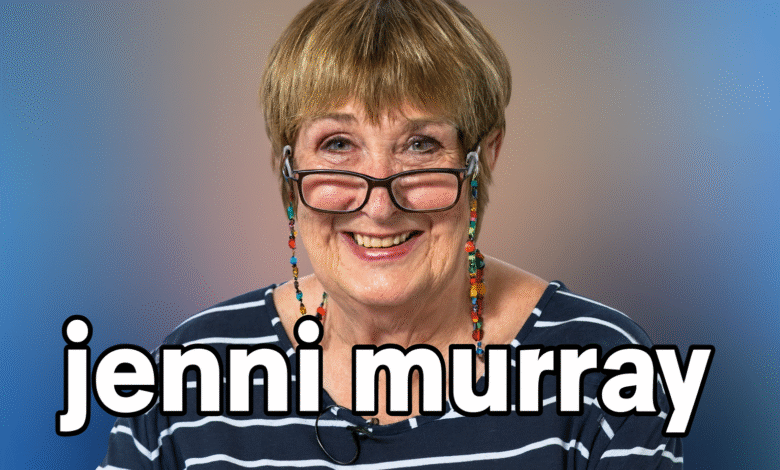
Introduction
Jenni Murray has long been recognised as one of Britain’s most influential broadcasters, authors, and advocates for women’s issues. With a career spanning decades, she built a remarkable reputation through her thoughtful discussions, fearless questioning, and ability to highlight voices that often went unheard. Her legacy reflects both positive praise for her contributions and the inevitable challenges that accompany a strong public voice. This article explores the complete story of Jenni Murray—her early life, education, rise in broadcasting, achievements, personal life, and the impact she leaves behind.
Quick Bio
| Category | Information |
|---|---|
| Full Name | Jennifer Susan Bailey (Jenni Murray) |
| Date of Birth | 12 May 1950 |
| Birthplace | Barnsley, West Riding of Yorkshire, England |
| Nationality | British |
| Education | Barnsley Girls’ High School; University of Hull (French & Drama) |
| Occupation | Broadcaster, Author, Journalist |
| Known For | BBC Radio 4 – Woman’s Hour |
| Marital Status | Married to David Forgham |
| Children | Two sons |
| Honours | OBE (1999), DBE (2011) |
jenni murray Early Life and Background
Jenni Murray was born in Barnsley, Yorkshire, a region known for its strong community spirit and working-class identity. Growing up in this environment shaped her worldview, giving her the grounded confidence and direct communication style that later became central to her broadcasting career. Her parents, Alvin Bailey and Winifred Jones, encouraged education and curiosity, allowing her to explore books, languages, and performance from an early age.
Her early education at Barnsley Girls’ High School provided a strong foundation in academic excellence. She later pursued French and Drama at the University of Hull, a choice that reflected her love for storytelling and communication. This combination of humanities and performance skills contributed significantly to her future ability to engage, inform, and challenge audiences.
Education and Foundation for Her Career
Jenni Murray’s time at the University of Hull equipped her with the skills required to think critically and express ideas clearly. Studying drama sharpened her ability to communicate with precision and emotional depth, while her language studies widened her worldview. This unique blend later helped her host complex discussions, approach sensitive issues with empathy, and create interviews that resonate deeply with listeners.
It was also during this time that she developed a strong sense of justice and a passion for women’s issues—two themes that later defined her broadcasting identity.
Start of Career: The Beginning of a Broadcasting Icon
Jenni Murray’s professional journey began in 1973 when she joined BBC Radio Bristol as a station assistant. Her ability to connect with audiences and communicate complex topics quickly elevated her into roles as a producer and presenter. This early period laid the foundation for her lifelong commitment to journalism, storytelling, and public service broadcasting.
By the late 1970s, she had transitioned into regional BBC television, presenting for South Today. Her calm presence and confident delivery gained the attention of national producers, leading her into more prominent roles.
Rise to National Fame: BBC and Woman’s Hour
Jenni Murray’s national breakthrough came in the early 1980s when she became a presenter for Newsnight. This role exposed her to high-level political reporting and complex social discussions. However, her most defining career moment arrived in 1987 when she became the main presenter of BBC Radio 4’s Woman’s Hour.
A Transformative Voice
Under her guidance, Woman’s Hour became a powerful platform for discussing women’s rights, health, society, culture, and political issues. Her ability to navigate emotional, controversial, and intellectual subjects made her a trusted and respected figure.
A Balance of Positive and Negative Responses
While millions praised her for being courageous and honest, some of her opinions sparked debate. Yet these moments only reaffirmed her influence as someone unafraid to ask difficult questions—a vital trait in journalism.
Writing Career and Publications
Alongside broadcasting, Jenni Murray built a successful writing career. Her books explore menopause, parenting, women’s history, and personal memoirs. Notable works include:
-
Woman’s Hour: 50 Years of British Women
-
Is It Me, or Is It Hot in Here?
-
A History of Britain in 21 Women
-
A History of the World in 21 Women
These publications strengthened her reputation as a leading advocate for women’s experiences, rights, and histories.
Honours and National Recognition
Jenni Murray’s contribution to broadcasting earned her some of the highest national honours in the UK. She was appointed an Officer of the Order of the British Empire (OBE) in 1999 for her services to broadcasting. In 2011, she received the title Dame Commander of the Order of the British Empire (DBE)—a testament to her lifelong dedication to journalism and public discourse.
Personal Life
Jenni Murray’s personal life remained grounded despite her public success. She first married young, and later married David Forgham, with whom she has two sons. Her family remained her anchor through life’s challenges, including health issues she later openly discussed to help others facing similar struggles.
Complete Career Overview
Jenni Murray’s career can be described as a powerful combination of communication, advocacy, and public engagement. From radio and television presenting to writing and public speaking, she demonstrated remarkable versatility. Her ability to hold thoughtful debates, represent women’s voices, and approach issues with compassion made her a vital figure in British media.
She interviewed world leaders, activists, artists, and everyday women whose stories deserved attention—always with respect and intellectual depth. Her work helped shape conversations about gender, equality, health, and society for more than three decades.
Legacy and Lasting Influence
Jenni Murray’s legacy is defined by her impact on public discourse. She reshaped how women’s issues are discussed in mainstream media and empowered audiences to engage more deeply with social issues. Her strong, steady voice became a symbol of thoughtful journalism, and her influence extends far beyond the years she spent behind the microphone.
Her contribution—positive, bold, and sometimes controversial—remains a testament to the power of free speech, empathy, and intelligent broadcasting.
Conclusion
Jenni Murray’s story is one of resilience, intellect, and fearless communication. Her journey from a young girl in Yorkshire to one of the most respected broadcasters in the UK demonstrates the power of dedication and authentic storytelling. Though celebrated for her achievements and challenged by controversy, her influence remains undeniable. Jenni Murray stands as a remarkable example of how a single voice can inspire, educate, and transform society.
FAQ
1. Who is Jenni Murray?
She is a British broadcaster, author, and former presenter of BBC Radio 4’s Woman’s Hour.
2. What is Jenni Murray best known for?
She is most recognised for hosting Woman’s Hour from 1987 to 2020.
3. What did she study?
She studied French and Drama at the University of Hull.
4. Has she written books?
Yes, she has written several influential books on women’s history, health, and personal memoirs.
5. What honours has she received?
She was awarded an OBE in 1999 and later became a Dame (DBE) in 2011.