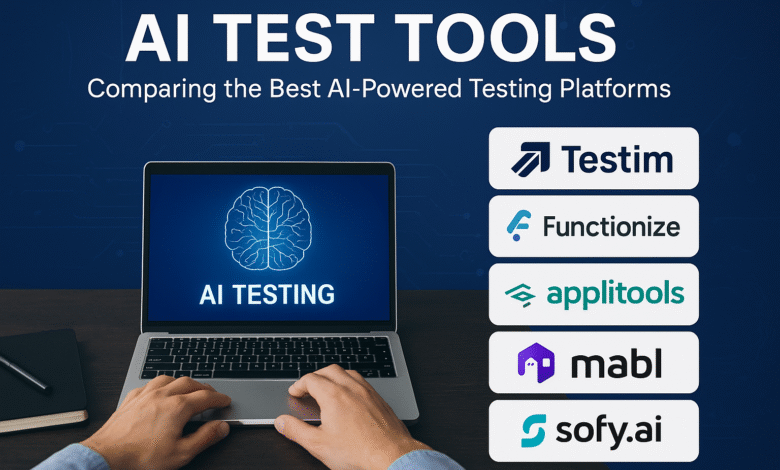
At present, the fast-growing and dynamic field of software testing, the application of ai testing tools is revolutionizing how organizations conduct testing tasks to promote quality, efficiency, and effectiveness. These tools employ aspects such as machine learning, natural language processing, and predictive analytics to optimize testing processes by cutting down on the time and effort to be channeled as well as improving the correctness of the outcomes. AI test tools can generate test cases for an application, identify abnormalities in the application, and even autonomously generate recommendations on how to fix the problems.
Also, by using analysis of historical test data, AI can determine failure points, the order of test cases’ execution, and which test cases are not necessary. The AI’s application in automation makes it possible for the software teams to incorporate constant testing at a large scale without requiring a lot of human involvement. With the software becoming increasingly large-scale and intricate, it is only expected that the use of artificial intelligence for automating the process is necessary for quicker and efficient release of the software. The problem with testing has now grown to demand Artificial Intelligence (AI) assisted testing tools to assist in this process. This article compares the top testing software to assist you in making a good decision.
Why Use AI Test Tools?
AI test tools bring several advantages over traditional testing methods, including:
Test Automation: The use of Artificial Intelligence makes test case creation, execution, and selection smarter, as well as done based on experience and new changes made in the applications. The use of these tools would result in the application of algorithms that measure key test conditions to offer an estimation of the most important test executions that would require testing. Besides, it is possible to refine test scripts automatically based on failure history, which enhances the automation frameworks.
Predictive Maintenance: It implies the ability to predict when and where a potential defect may occur so that it can be fixed before it negatively affects the product. Several machine learning algorithms scrutinize previous defects, code differences, and tests, and provide remedial actions on the fly. They can sort actions and bugs based on their importance, identify the type of issues, and suggest resolutions to them in certain cases, making debugging faster and efficient.
Self-Healing Scripts: Test scripts can change automatically and thereby minimize maintenance costs in the case of changes in the UI. Organizational automation scripts can be troublesome whenever slight changes are made to the User Interface because the latter will disrupt them. Self-healing mechanisms act like smart solutions that learn how the user interface is being changed and modify the locators on their own, thus eliminating the flakiness problems.
Faster Time-to-Market: AI helps in the fast delivery of the software and shortens the testing cycle by reducing the time to execute tests and increasing the efficiency of identifying defects. It suggests that self-learning AI tools are permanently monitoring test data and testing strategies and offer predictions that allow finding defects in the process and fixing them before they reach the later stages of the development process.
Better Test Coverage: AI-based tools can generate a large number of tests from the vast data that human testers can easily miss. It is worth noting that AI encompasses the capability to analyze code changes, user activity, and historical issues to identify vulnerabilities in a particular application. These tools can perform multiple tests in one go in a very short period and test the application in various environments, on different devices, or various platforms.
Top AI-Powered Testing Platforms
Here is a Comprehensive Comparison of the Leading AI-powered testing Platforms:
Testim
Testim is an AI-based testing tool that can make the process of test generation and running more convenient and time-saving, with less need for testing maintenance. As a Python-based tool, it uses machine learning to create automated test cases and is capable of maintaining the test scripts immune to any UI changes. This makes it ideal to be adopted by organizations that need to implement large and evolving UI tests that are mostly automated and called for occasionally by the testing tools. This is suitable for organizations that require UI testing but at an escalated level, with little attention to the maintenance of the testing tool.
Functionize
Functionize is a smart testing tool that is based on powerful artificial intelligence and natural language processing techniques. It provides self-learning test scripts that get updated with time and do not need to be updated. Also, Functionize allows one to perform function testing on various browsers and devices, which adds across-browser and across-device coverage.
Applitools
Applitools, for short, is an AI solution that is widely used for visual testing, and its purpose is to improve UI testing by using the advantages of image comparison. It uses AI-based visual testing to identify any sort of UI variance. This not only analyzes the differences in different resolutions, browsers, and devices. The fact that its baseline management is automated makes it easier to effectively detect visual changes, which decreases the amount of false positives that are likely to occur, minimizing the likelihood of having a test that is so inaccurate.
Mabl
Mabl is an AI-based platform for continuous testing that has been developed particularly with the Agile culture in mind. It is capable of providing end-to-end testing supported by artificial intelligence that improves the conception of tests and testing. Its key feature worth to mention is self-healing tests that adjust to the changes in the application and require much less updates.
Mabl also offers performance and accessibility tests, which will make sure that your applications are highly usable and efficient. If you are using CI/CD pipelines, you can integrate them easily, and you are also going to cut down on your continuous testing time and speed of your software delivery – that makes it perfect for any team that needs to add QA without bringing on a bunch of coding help.
Sofy.ai
Sofy.ai provides a comprehensive mobile testing solution to help application testers and developers enhance the quality of their products. This is giving real device access to the cloud to meet the needs of teams to run multiple devices, but with no infrastructure needed. Effectively, with the help of no-code test automation inbuilt within the functionality of Sofy.ai, any tester, developer, and business user can create, run, and manage the tests.
The platform contains AI-based testing reports which allow to determine problematic areas and their solution, optimize the application’s performance, and maintain stability when available in various environments. Sofy.ai is best for companies that want to adopt mobile app testing at scale and do not necessarily want to write code for testing, especially for Agile-DevOps environments.
Choosing the Right AI Test Tool
When selecting an AI test tool, consider the following factors:
Testing Tools Requirements: Determine the purpose that fits the tool to meet you Testing needs (UI, API, Performance, etc.)
Ease of Use: As for the tools, some of them are codeless and can be used by anyone, while others need scripting skills.
Compatibility: Please make sure that the given tools will integrate smoothly into your existing CI/CD pipeline and tests.
Scalability: It means the ability of the tool to meet the ever-increasing needs of software and testing demands.
Pricing: Interested members have to decide on a pricing structure that will be fixed depending on the size of the team and the frequency of testing.
Elevating QA Efficiency with LambdaTest
LambdaTest is an AI testing tool that runs on the cloud and improves software quality and the process of testing. Thus, having access to actual devices and a wide range of browsers, it does not require additional investments in the equipment to perform cross-browser and cross-platform testing.
Key Benefits for QA Teams
Here are some key benefits for QA teams:
AI-Powered Test Execution: LambdaTest provides artificial intelligence to get a complete test coverage with faster execution and identify different issues at runtime. Thus, through the use of data obtained from previous tests and application behavior,LambdaTest’s AI software testing capabilities can suggest failure probabilities, recommend important test cases, and adapt test processes as needed. This allows QA teams to focus on the most critical tests, saving time and increasing effectiveness.
Parallel Testing at Scale: The serial testing process of various elements could cause a considerable amount of time to be spent on the overall QA cycle, especially in large-scale applications. LambdaTest can run multiple numbers of cases in parallel and across different combinations of browsers, operating systems, and devices. This cuts down the amount of time of execution, on average, by more than half and assists organisations in gaining quicker feedback loops on tests.
Seamless CI/CD Integration: This enables QA to integrate it with the development process and execute tests from the development phase through to production. LambdaTest is an amazing tool when it comes to the incorporation of testing cycles in CI/CD pipelines, as it increases the reliability of the software by removing any defects hindering deployment.
Automated & Live Testing: The good thing about LambdaTest is that it provides both automated and manual testing to fully cover the testing needs. Selenium, Cypress, Playwright, Appium, and Puppeteer allowed the teams to perform web and mobile app tests with various environments.
Conclusion
AI test tools are in the process of changing the approach to software testing in terms of effectiveness, precision, and flexibility. These are not only able to self-perform repetitive tasks but also able to improve test cases execution with smart knowledge, disturbing humans from doing anything inefficient and time-consuming. Regardless, you may require complex UI validation, healing functions, or AI-based forecasting models; having an appropriate AI-based testing platform makes all the difference.
Sourcing and functional understanding of AI test tools in terms of their capabilities, strengths, and uses serve to enhance the overall flow and efficiency of testing procedures while reducing the occurrence of missteps in the delivery of software. The adoption of AI / ML results in automation of development, which accelerates product development, increases software reliability, and its competitiveness in the market space.
Exploreclarion