jon fosse: The Powerful Voice of Silence in Modern World Literature

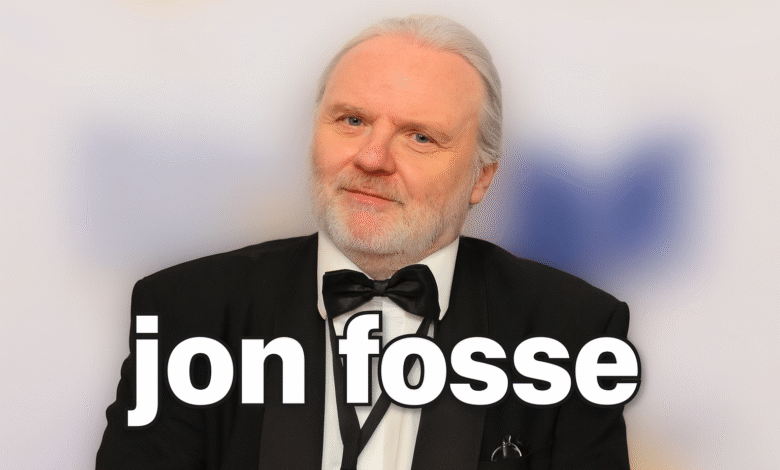
Table of Contents
ToggleIntroduction
Jon Fosse stands as one of the most influential literary figures of the modern era, known for transforming silence, repetition, and simplicity into profound artistic force. Writing primarily in Nynorsk, he reshaped how readers and audiences experience inner life, faith, loneliness, and human connection. His work feels quiet on the surface, yet emotionally intense beneath, proving that literature does not need noise to be powerful.
At the same time, Jon Fosse is not a universally easy writer. Some readers admire his meditative style, while others struggle with its slow rhythm and deliberate restraint. This contrast—between admiration and challenge—has become part of his legacy. Still, his global recognition, including the Nobel Prize in Literature, confirms his lasting importance in world literature.
Quick Bio: Jon Fosse
| Field | Details |
|---|---|
| Full Name | Jon Olav Fosse |
| Date of Birth | 29 September 1959 |
| Birthplace | Haugesund, Norway |
| Nationality | Norwegian |
| Language | Nynorsk |
| Profession | Novelist, Playwright, Poet, Essayist |
| Education | University of Bergen (Comparative Literature) |
| Religion | Catholic |
| Children | Six |
| Known For | Minimalist prose, modern drama, existential themes |
| Major Honor | Nobel Prize in Literature (2023) |
Early Life and Background
Jon Fosse was born in Haugesund, a coastal town in western Norway, and grew up in a rural environment near the Hardanger fjord. This quiet landscape, marked by nature, isolation, and reflection, strongly shaped his inner world. From an early age, he showed an interest in writing, music, and language, often turning inward rather than outward.
As a teenager, he experienced periods of emotional difficulty, which later influenced his focus on inner conflict and silence. Writing became both a creative outlet and a way to understand existence. These early experiences laid the foundation for a literary voice that would later resonate deeply with readers across cultures.
Education and Intellectual Formation
Jon Fosse studied comparative literature at the University of Bergen, where he was exposed to European modernism, philosophy, and classical drama. His academic background helped him engage critically with language, form, and structure, but he never allowed theory to overpower emotion in his work.
Instead of pursuing an academic career, he chose the uncertain path of full-time writing. This decision brought both freedom and struggle, but it allowed him to develop a unique style untouched by commercial pressure. His education strengthened his discipline, while his independence preserved his originality.
The Beginning of a Literary Career
Fosse made his literary debut in the early 1980s with a novel that already hinted at his spare, focused style. While early reception was mixed, critics noticed his distinct voice. He continued writing steadily, producing novels, poetry, and later plays that refined his minimalist approach.
His breakthrough came in theatre during the 1990s, when his plays began to attract international attention. Directors and audiences recognized something new: drama driven not by action, but by pauses, repetition, and unspoken emotion. This marked the true beginning of Jon Fosse’s global influence.
Career Overview and Major Works
Over the decades, Jon Fosse has written across multiple genres, including novels, plays, poetry, essays, and children’s literature. His dramatic works are among the most performed contemporary plays worldwide, often compared in importance to those of Henrik Ibsen.
His later prose works, especially long-form novels, deepened his reputation as a writer of spiritual and existential depth. These works explore identity, faith, addiction, art, and the passage of time. While praised for originality, some critics argue that his repetition-heavy style demands patience and may not appeal to all readers.
Writing Style and Themes
The defining feature of Jon Fosse’s writing is minimalism. He uses short sentences, repeated phrases, and long silences to mirror human thought and emotional hesitation. This style creates a rhythmic, almost musical experience that draws readers inward.
Thematically, his work centers on existence, loneliness, faith, love, and death. He often explores moments where language fails, and silence speaks louder than words. While some readers find this deeply moving, others consider it challenging or emotionally heavy. This tension, however, is precisely what gives his writing lasting power.
Faith and Personal Transformation
Jon Fosse’s spiritual journey plays a significant role in his later work. Raised in a Lutheran context, he moved through periods of doubt before converting to Catholicism as an adult. This shift influenced the contemplative and mystical dimensions of his writing.
Rather than preaching, he presents faith as experience—uncertain, fragile, and deeply human. His work reflects belief as something lived quietly, often in struggle. This nuanced portrayal has earned respect even from secular readers, though it has also sparked debate among critics.
Global Recognition and Honors
Jon Fosse’s international reputation grew steadily through translations and theatre productions across Europe, Asia, and the Americas. His recognition culminated in the Nobel Prize in Literature, awarded for giving voice to what cannot easily be spoken.
This honor confirmed his position among the most important writers of his generation. Yet, with fame came renewed scrutiny, as some questioned whether his restrained style represents the future of literature or a niche artistic path. Regardless, his influence remains undeniable.
Legacy and Influence
Jon Fosse’s legacy lies in his courage to resist literary trends and remain faithful to his voice. He proved that quiet writing can be revolutionary and that simplicity can hold immense emotional weight. Younger writers and playwrights continue to study his use of rhythm, silence, and repetition.
At the same time, his work challenges readers to slow down and engage deeply. This demand may limit mass appeal, but it ensures lasting relevance. His contribution to modern literature is not about popularity, but about depth and authenticity.
Conclusion
Jon Fosse is a writer who transformed silence into strength and minimalism into meaning. His work offers profound insight into human vulnerability, faith, and existence, while also challenging conventional expectations of storytelling. Though not universally accessible, his writing rewards patience with rare emotional clarity.
In the landscape of modern world literature, Jon Fosse stands as a powerful reminder that the quietest voices can leave the deepest impact.
FAQs
Who is Jon Fosse?
Jon Fosse is a Norwegian novelist, playwright, and poet known for his minimalist style and existential themes.
What language does Jon Fosse write in?
He writes primarily in Nynorsk, one of Norway’s official written languages.
Why is Jon Fosse famous?
He is famous for redefining modern theatre and prose through silence, repetition, and emotional depth, and for winning the Nobel Prize in Literature.
What are common themes in Jon Fosse’s work?
His work explores existence, loneliness, faith, love, identity, and the limits of language.
Is Jon Fosse’s writing easy to read?
Some readers find it deeply moving, while others find it challenging due to its slow pace and repetition.