ruth davidson – A Powerful Political Force Who Redefined Scottish Conservatism

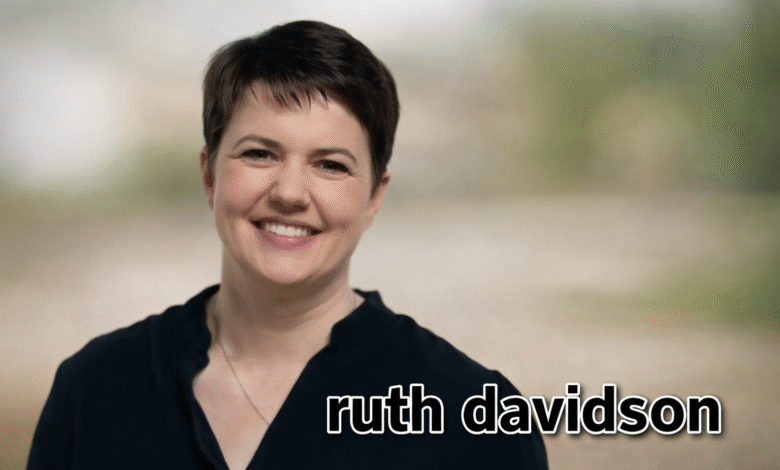
Table of Contents
ToggleIntroduction
Ruth Davidson is one of the most recognisable and influential figures in modern Scottish politics. Known for her direct communication style, strong leadership, and ability to reshape political narratives, she rose from journalism into high-level politics at a time when her party faced deep challenges in Scotland. Her journey reflects both remarkable success and sharp criticism, making her career a compelling case study in contemporary leadership.
Over more than a decade in public life, Ruth Davidson has been praised for revitalising a struggling party and criticised for firm unionist positions and internal party disagreements. Her story is not one of unbroken triumph, but of resilience, adaptation, and long-term influence on Scottish and UK political discourse.
Quick Bio: Ruth Davidson
| Attribute | Details |
|---|---|
| Full Name | Ruth Elizabeth Davidson, Baroness Davidson of Lundin Links |
| Date of Birth | 10 November 1978 |
| Birthplace | Edinburgh, Scotland |
| Nationality | British (Scottish) |
| Education | MA (Hons) English Literature, University of Edinburgh |
| Profession | Politician, Broadcaster, Author |
| Political Party | Scottish Conservative and Unionist Party |
| Key Role | Leader of Scottish Conservatives (2011–2019) |
| Current Position | Member of the House of Lords |
| Family | Partner: Jen Wilson; One son |
Early Life and Education
Ruth Davidson was born in Edinburgh and spent her childhood in different parts of Scotland, including Selkirk and later Lundin Links in Fife. Growing up in a non-elite background, she developed a strong sense of independence and discipline, traits that would later define her leadership style. Her upbringing in Scotland’s diverse communities helped shape her understanding of regional identity and public service.
She studied English Literature at the University of Edinburgh, where she developed strong analytical and communication skills. This academic foundation later proved valuable in both journalism and politics, enabling her to articulate arguments clearly and connect with broad audiences.
Start of Career: Journalism and Public Service
Before entering politics, Ruth Davidson built her professional career in journalism. She worked for local newspapers and radio before joining BBC Scotland, where she served as a journalist, producer, and presenter. This period sharpened her media awareness and public-facing confidence, giving her an advantage over many political peers.
Alongside journalism, she served in the Territorial Army as a signaller, gaining experience in teamwork, structure, and responsibility. This combination of media expertise and disciplined service helped prepare her for the pressures of political leadership.
Entry into Politics
Ruth Davidson formally entered politics in 2009, motivated by a desire to contribute to public debate and national decision-making. Her early electoral contests were challenging, but they raised her profile within the Conservative Party in Scotland, where new leadership was urgently needed.
In 2011, she was elected as a Member of the Scottish Parliament and, in the same year, chosen as leader of the Scottish Conservatives. Her appointment marked a turning point for the party, which had struggled for relevance in devolved Scottish politics.
Leadership of the Scottish Conservatives
As leader from 2011 to 2019, Ruth Davidson transformed the public image of the Scottish Conservative Party. She repositioned it as a clear unionist alternative to the Scottish National Party, while modernising its tone and broadening its appeal beyond traditional supporters.
Under her leadership, the party achieved its strongest Scottish Parliament results since devolution and became the official opposition. Supporters praised her clarity, confidence, and authenticity, while critics argued her approach deepened political polarisation. Both perspectives underline the impact of her leadership on Scotland’s political balance.
Key Political Positions and Influence
Ruth Davidson was a prominent voice during the Scottish independence referendum, campaigning firmly for Scotland to remain part of the United Kingdom. She also supported the UK remaining in the European Union, a stance that later created tension within wider Conservative politics.
Her willingness to express disagreement with party leadership at UK level strengthened her reputation for independence but also contributed to internal strain. These conflicts ultimately influenced her decision to step down as leader, highlighting the personal and political cost of principled positions.
Transition to the House of Lords
After leaving frontline Scottish politics, Ruth Davidson was appointed a life peer and entered the House of Lords. In this role, she continues to contribute to legislative debate, drawing on her experience in devolved and national governance.
Her presence in the Lords reflects recognition of her political service and ensures her ongoing influence in UK public life, even beyond electoral politics.
Media, Writing, and Public Commentary
Alongside parliamentary work, Ruth Davidson remains active in media and public commentary. She contributes to political discussion through broadcasting and has authored a book focused on leadership and women in public life.
Her communication style remains direct and accessible, helping her stay relevant in public debate. Supporters see this as a strength, while critics view her continued visibility as politically strategic rather than purely analytical.
Personal Life and Public Identity
Ruth Davidson is openly lesbian and has spoken about the importance of representation and inclusion in public life. She lives with her partner, Jen Wilson, and they have one son. Her openness has been widely recognised as a milestone for diversity in UK politics.
Balancing family life with high-profile public roles has shaped her career decisions and public narrative, particularly her choice to step back from frontline leadership.
Legacy and Long-Term Impact
Ruth Davidson’s legacy lies in reshaping the Scottish Conservative Party and redefining its role in devolved politics. She demonstrated that leadership style, clarity of message, and personal authenticity can alter political fortunes, even in challenging environments.
At the same time, her career illustrates the limits of individual leadership within broader political systems. Praised for revitalisation yet criticised for division, her impact remains a subject of debate, confirming her lasting relevance in modern British political history.
Conclusion
Ruth Davidson’s career is defined by strength, controversy, progress, and resistance. She succeeded in transforming a marginalised party and failed to reconcile all internal and national divisions, reflecting the complex reality of political leadership. Her journey from journalism to the House of Lords shows how conviction and communication can shape public life, even amid disagreement. Whether admired or opposed, her influence on Scottish and UK politics is undeniable.
Frequently Asked Questions (FAQ)
Who is Ruth Davidson?
Ruth Davidson is a Scottish politician, former leader of the Scottish Conservatives, and a member of the House of Lords.
What is Ruth Davidson best known for?
She is best known for revitalising the Scottish Conservative Party and serving as its leader from 2011 to 2019.
What is Ruth Davidson’s current role?
She currently serves as a life peer in the House of Lords and works in broadcasting and public commentary.
Did Ruth Davidson serve in the military?
Yes, she served in the Territorial Army as a signaller earlier in her career.
Why did Ruth Davidson step down as party leader?
She stepped down due to political differences at UK level and a desire to focus on family life.