Andrew Norfolk: The Fearless Journalist Who Exposed the Truth — Celebrated for Courage, Challenged by Controversy

Introduction
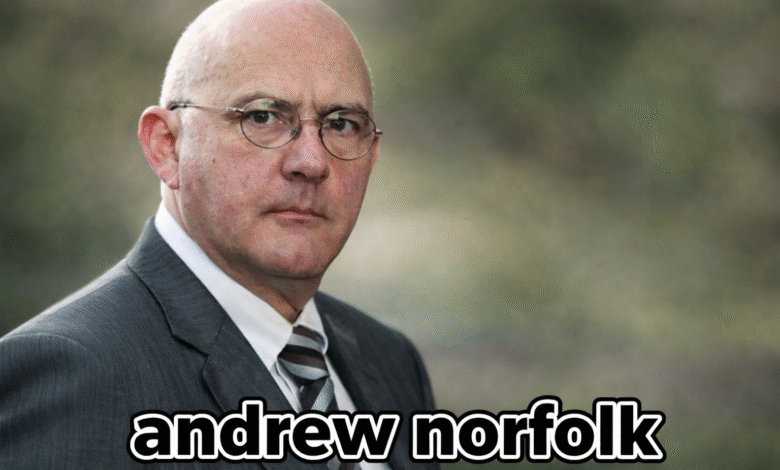
Andrew Norfolk is widely recognised as one of the most impactful investigative journalists in modern British media. His reporting brought hidden institutional failures into public view and forced national conversations that many preferred to avoid. Praised for courage and persistence, yet criticised by some for the sensitivity of his investigations, Norfolk’s career represents both the power and the burden of investigative journalism.
Working primarily at The Times, he became known for pursuing stories that exposed systemic neglect and wrongdoing. His work produced tangible consequences: official inquiries, policy debates, and lasting changes in how authorities approach serious social issues. At the same time, it placed him under intense public scrutiny, demonstrating how truth-telling journalism can attract both admiration and resistance.
Quick Bio
| Detail | Information |
|---|---|
| Full Name | Andrew Mark Norfolk |
| Date of Birth | 8 January 1965 |
| Place of Birth | Canterbury, Kent, England |
| Nationality | British |
| Profession | Investigative Journalist |
| Known For | Major investigative reporting at The Times |
| Years Active | 1989–2024 |
Early Life and Background
Andrew Norfolk was born in Canterbury, Kent, and spent his early years in England within an academically inclined household. His father worked as a headmaster, while his mother supported the family’s educational environment. This upbringing placed strong emphasis on learning, discipline, and public responsibility, values that later shaped Norfolk’s professional ethics.
As a child and teenager, Norfolk was exposed to both rural and urban perspectives of English life, experiences that helped him understand local communities and social dynamics. These early influences contributed to his later interest in stories that connected individual experiences with broader institutional systems.
Education and Academic Formation
Norfolk attended Kent College before continuing his schooling at Ashville College in Harrogate. His education in independent schools provided a structured academic foundation and encouraged analytical thinking. From an early stage, he demonstrated a strong interest in reading, writing, and public affairs.
He later studied English at Durham University, graduating with a bachelor’s degree in 1987. During university, he was actively involved in student journalism and extracurricular activities, gaining early experience in reporting, editing, and teamwork. This period refined his communication skills and confirmed journalism as his chosen profession.
Start of Journalism Career
Andrew Norfolk began his professional journalism career in 1989 as a reporter at the Scarborough Evening News. Working in local journalism allowed him to develop practical reporting skills, including interviewing, fact-checking, and deadline-driven writing. These formative years taught him the importance of accuracy and community trust.
In 1995, he joined the Yorkshire Post, where he expanded his reporting scope to regional and political issues. This role exposed him to more complex investigations and strengthened his reputation as a determined and reliable journalist capable of handling sensitive subjects.
Career at The Times
Norfolk joined The Times in 2000, marking a turning point in his career. Initially working as a reporter, he later became the newspaper’s north-east correspondent in 2002. This role placed him at the centre of regional governance, policing, and social policy reporting.
In 2012, he was appointed Chief Investigative Reporter. In this position, Norfolk led or contributed to major investigations that brought national attention to institutional failures. His work combined extensive document analysis, long-term source development, and persistence in the face of official resistance.
Major Investigative Work and National Impact
Andrew Norfolk is best known for investigations that exposed serious shortcomings in how authorities handled cases of child exploitation and institutional neglect. His reporting revealed patterns of failure, highlighting how warnings were ignored and vulnerable individuals left unprotected.
These investigations triggered public inquiries, reshaped media coverage, and forced accountability from public bodies. While widely praised for bringing truth into the open, the work also generated criticism and controversy, demonstrating the difficult balance between public interest reporting and social sensitivity.
Awards and Professional Recognition
Norfolk’s investigative work earned significant professional recognition. He received the Paul Foot Award for investigative journalism and shared the Orwell Prize for political writing. In 2014, he was named Journalist of the Year at the British Journalism Awards.
These honours reflected not only the impact of his reporting but also the high standards of evidence and persistence required to complete such investigations. They cemented his reputation as a leading figure in British journalism.
Later Career and Retirement
After more than two decades at The Times, Andrew Norfolk retired in November 2024. By this point, his career had influenced journalistic practices, newsroom priorities, and public expectations of investigative reporting.
His retirement marked the end of an era, but his work continued to shape discussions on accountability, safeguarding, and the responsibilities of public institutions. He remained respected among peers for his commitment to journalism’s core values.
Legacy and Influence
Andrew Norfolk’s legacy lies in demonstrating how investigative journalism can drive real-world change. His work showed that determined reporting can challenge powerful institutions and amplify voices that might otherwise remain unheard.
At the same time, his career illustrates the pressures faced by journalists who pursue uncomfortable truths. Praised for bravery and criticised by opponents, Norfolk’s professional life highlights the complex role of the press in democratic societies.
Conclusion
Andrew Norfolk’s career stands as a powerful example of journalism’s ability to inform, challenge, and transform society. Through disciplined investigation and unwavering commitment, he brought critical issues into the national spotlight. While his work attracted both praise and criticism, its lasting impact is undeniable.
His story reminds readers that meaningful journalism often exists at the intersection of public service and controversy. Andrew Norfolk will be remembered as a journalist who chose persistence over silence and evidence over convenience.
Frequently Asked Questions (FAQ)
Who is Andrew Norfolk?
Andrew Norfolk is a British investigative journalist best known for his long-term reporting at The Times and for leading major national investigations.
What is Andrew Norfolk known for?
He is known for investigative journalism that exposed institutional failures and prompted public inquiries and national debate.
Where was Andrew Norfolk educated?
He studied English at Durham University after attending Kent College and Ashville College.
Did Andrew Norfolk receive journalism awards?
Yes, he received several major awards, including the Paul Foot Award and Journalist of the Year at the British Journalism Awards.
What is Andrew Norfolk’s legacy?
His legacy is defined by impactful investigative reporting that strengthened accountability and demonstrated the power of responsible journalism.