Lady Louise Windsor: The Graceful Royal Shaping a Quiet Yet Powerful Modern Legacy

Introduction
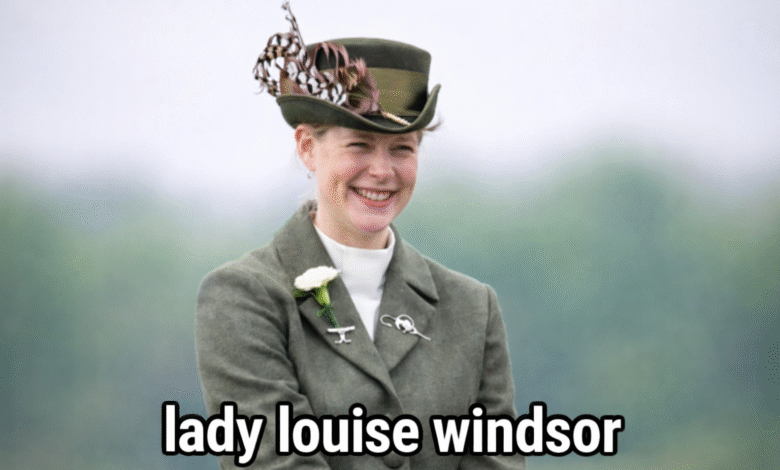
Lady Louise Windsor stands as one of the most quietly respected members of the British royal family. Unlike senior working royals who live constantly under public scrutiny, her life reflects a careful balance between royal heritage and personal privacy. This balance has earned her admiration, but it has also meant limited public information—something that both strengthens her dignity and limits public understanding of her journey.
Born into one of the most famous families in the world, Lady Louise Windsor represents a modern royal path: educated, grounded, and intentionally distant from celebrity culture. While she benefits from immense privilege, she also faces the challenge of defining her identity without a formal royal role. Her story is powerful precisely because it is restrained, disciplined, and still unfolding.
Quick Bio
| Attribute | Details |
|---|---|
| Full Name | Lady Louise Alice Elizabeth Mary Mountbatten-Windsor |
| Date of Birth | 8 November 2003 |
| Age | 22 years (as of 2026) |
| Birthplace | Surrey, England |
| Nationality | British |
| Parents | Prince Edward, Duke of Edinburgh & Sophie, Duchess of Edinburgh |
| Sibling | James, Earl of Wessex |
| Education | St George’s School, Windsor; St Mary’s School Ascot; University of St Andrews |
| Religion | Christianity (Church of England) |
| Marital Status | Unmarried |
| Children | None |
| Public Role | Non-working royal, student |
Lady Louise Windsor Early Life and Royal Background
Lady Louise Windsor was born into history, but her early life was shaped with careful intention. Her parents chose to raise her and her brother with as much normality as possible, avoiding royal titles that could place unnecessary pressure on their children. This decision was both praised and criticized—praised for its humanity, yet questioned by those who expected a more traditional royal upbringing.
Her childhood was largely spent away from the spotlight, focusing on education, family, and personal interests. While public appearances were rare, she occasionally joined major family events, reinforcing her royal identity without allowing it to dominate her life. This reserved upbringing helped her develop independence, though it also meant fewer opportunities to establish a public role early on.
Education and Intellectual Development
Education has played a central role in Lady Louise Windsor’s life. She attended respected institutions known for academic discipline and character development. Her schooling emphasized literature, history, and critical thinking—subjects that encourage depth rather than display.
She later enrolled at the University of St Andrews, an institution known for academic excellence and discretion. Studying English allowed her to explore language, culture, and thought at a high level. While some expected her to pursue politics or diplomacy, her academic choices reflect intellectual curiosity rather than career ambition. This quiet academic focus has strengthened her image as thoughtful and grounded, though it leaves questions about her long-term professional direction.
Public Life Without a Formal Role
Lady Louise Windsor does not hold an official working position within the royal institution. This reality brings both freedom and limitation. On the positive side, she enjoys privacy, autonomy, and the ability to choose her future without institutional obligation. On the negative side, her lack of a defined role often leads to speculation and unrealistic expectations.
She appears at selected ceremonial occasions, maintaining respect for tradition while avoiding constant media exposure. This selective presence reinforces her dignity, but it also means her contributions are subtle rather than visible. In a world that often rewards loud influence, her quiet participation challenges modern expectations of relevance.
Personal Values and Interests
One of the most defining aspects of Lady Louise Windsor’s personality is her strong connection to tradition and discipline. She has shown a consistent interest in equestrian activities, particularly carriage driving, a passion inherited from her family. This interest reflects patience, precision, and respect for heritage.
Her personal values appear rooted in service, learning, and restraint. While some critics argue that her low profile limits her impact, supporters see it as a strength—proof that influence does not always require attention. This contrast between visibility and value remains central to how she is perceived.
Financial Status and Public Transparency
There is no confirmed public information regarding Lady Louise Windsor’s net worth, salary, or personal income. As a non-working royal, she does not receive a public salary, nor is she known to be involved in business ventures or companies. Any financial assumptions beyond this are speculative and unverified.
This lack of transparency can frustrate public curiosity, but it also aligns with her private lifestyle. Unlike celebrity figures who monetize visibility, her financial situation remains intentionally discreet. This protects her independence but limits public understanding of her economic standing.
Challenges and Criticism
Despite her positive image, Lady Louise Windsor is not without criticism. Some observers argue that her position reflects inherited privilege without public accountability. Others question whether maintaining a royal identity without active service is sustainable in a modern society.
However, these criticisms coexist with recognition of her personal restraint. She neither exploits her status nor rejects it. Instead, she occupies a middle ground—respected but reserved, privileged yet private. This balance is difficult to maintain and often misunderstood.
Latest Public Presence
In recent years, Lady Louise Windsor has continued to attend significant family and national events without expanding her public role. Her presence signals continuity rather than change. There are no confirmed announcements regarding future royal duties, career plans, or public service commitments.
This absence of declaration keeps her future open. It may disappoint those seeking clarity, but it reinforces her right to choose her own path. In a monarchy increasingly focused on efficiency, her quiet position reflects a transitional era.
Legacy in Progress
Lady Louise Windsor’s legacy is not defined by achievements or titles, but by potential and principle. She represents a generation of royals navigating tradition in a changing world. Her life demonstrates that influence can exist without spectacle and that dignity can thrive without constant validation.
Her story is still being written. Whether she chooses public service, private professional life, or continued discretion, her approach has already left a mark—one defined by calm strength rather than ambition.
Conclusion
Lady Louise Windsor embodies a modern royal identity shaped by restraint, education, and personal choice. Her life highlights both the privilege and pressure of royal birth, offering a thoughtful example of balance in an age of exposure. While her quiet presence may challenge expectations, it ultimately reinforces a powerful truth: not all influence is loud, and not all legacies are rushed.
As time unfolds, her choices—not public demands—will define her future. That freedom may be her greatest inheritance.
FAQs About Lady Louise Windsor
Q1: Is Lady Louise Windsor a working royal?
No, she does not hold an official working role within the royal family.
Q2: Does Lady Louise Windsor have a husband or children?
No, she is unmarried and has no children.
Q3: What is Lady Louise Windsor known for?
She is known for her private lifestyle, education, and equestrian interests.
Q4: Does Lady Louise Windsor receive a salary?
There is no publicly confirmed salary or income.
Q5: Why does Lady Louise Windsor keep a low profile?
Her parents intentionally raised her to live a more private and independent life.