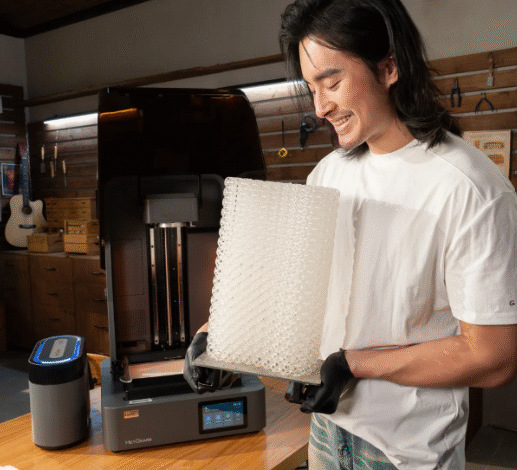
Water washable resin is often marketed as a safer, easier alternative to standard resins. It eliminates the need for isopropyl alcohol (IPA), which reduces fumes and fire hazards in the workshop. However, the term “washable” creates a dangerous misconception among new users.
Rinsing a print with water does not render the chemical waste benign. Understanding the actual toxicity profile is crucial for any workspace. The convenience of water cleanup comes with severe environmental and safety caveats that are often overlooked by beginners.
Chemical Composition and Toxicity
Water washable resins rely on hydrophilic monomers to achieve solubility. While this chemistry differs from standard resins to allow water cleaning, the core toxicity levels are comparable. The liquid still contains methacrylates and photo-initiators that are hazardous to human health and aquatic life.
Whether you operate a budget machine or a high-end resin printer, the material in the vat is an industrial irritant. It requires the same personal protective equipment (PPE) as any other photopolymer. It is not soap, and it is certainly not harmless.
Skin Safety Risks
Many users mistakenly believe that because the resin washes off with water, it is safer to touch than standard variants. This is a critical error. Even if you own the best resin 3d printer available, the machine cannot protect you from improper handling of raw materials during the cleaning phase.
Sensitization and Dermatitis
Direct contact is the primary hazard. These resins are sensitizers, meaning repeated exposure triggers an immune response. This leads to contact dermatitis, a painful and permanent allergic reaction. Once you become sensitized, you may never be able to work with resin again.
The Permeability Factor
Water is a more efficient transport medium than viscous resin. Contaminated wash water can soak into clothing or skin pores rapidly. This carries dissolved toxins deeper into the skin layer. Nitrile gloves are non-negotiable during the entire printing and cleaning process.
The Rinse Water Problem
The most significant issue with this material is the disposal of the wash water. You absolutely cannot pour this byproduct down the sink or flush it down the toilet. Doing so is illegal in many jurisdictions and ecologically devastating.
Uncured resin is highly toxic to fish and other aquatic organisms. Municipal water treatment plants are not designed to filter out these specific chemical compounds. Even small amounts contribute to microplastic pollution and chemical contamination of local waterways.
Infrastructure Damage
Beyond the environmental ethics, there is a practical danger to your home infrastructure. Resin is heavier than water and does not stay suspended forever. It will eventually settle in the low points of your plumbing, specifically the P-traps.
Over time, ambient UV light or chemical reactions will cure this sediment. It turns into hard plastic that chemical drain cleaners cannot dissolve. The only fix for a pipe clogged with cured resin is expensive physical replacement.
Correct Waste Management Protocol
Since the drain is off-limits, you must treat the rinse water as hazardous waste. Managing this byproduct requires a dedicated system separate from your household plumbing. This often negates the convenience factor of skipping alcohol.
Follow these steps for responsible disposal:
- Evaporation: Pour the contaminated water into a wide, clear container. Place it outside in direct sunlight or under a powerful UV curing lamp.
- Separation: Allow the water to evaporate completely. The UV light will cure the remaining resin residue into a solid sludge or plastic sheet.
- Disposal: Once the material is fully dried and hardened, the solid plastic can usually go in the standard trash. Liquid sludge must be taken to a hazardous waste facility.
Performance Trade-offs
Safety is not the only compromise. To make the resin soluble in water, manufacturers add specific hygroscopic chemicals. These additives often make the final cured parts more brittle than standard ABS-like resins.
Additionally, these parts can absorb moisture from the air even after curing. In humid environments, this leads to cracking, warping, and dimensional instability over time. If durability is key, standard resin washed in IPA is often the superior engineering choice.
Would you like me to create a comparison table summarizing the chemical handling differences between IPA and water-based workflows?
Conclusion
Water washable resin offers convenience by removing flammable solvents, but it does not remove the toxicity. It requires strict water management disciplines to avoid environmental damage and plumbing disasters.
If you cannot evaporate liters of wastewater or lack access to hazardous waste disposal, this material is not suitable for your home. Treat the wash water with the same caution as the resin itself.