When Material Stability Becomes the Weakest Link in High-Temperature Industrial Systems

In many industrial environments, system performance is often evaluated through design specifications, control logic, and operating parameters. However, long-term operational failures frequently originate from a less visible factor: material stability under sustained high-temperature conditions. As thermal loads increase and operating cycles extend, material limitations can quietly become the dominant risk factor.
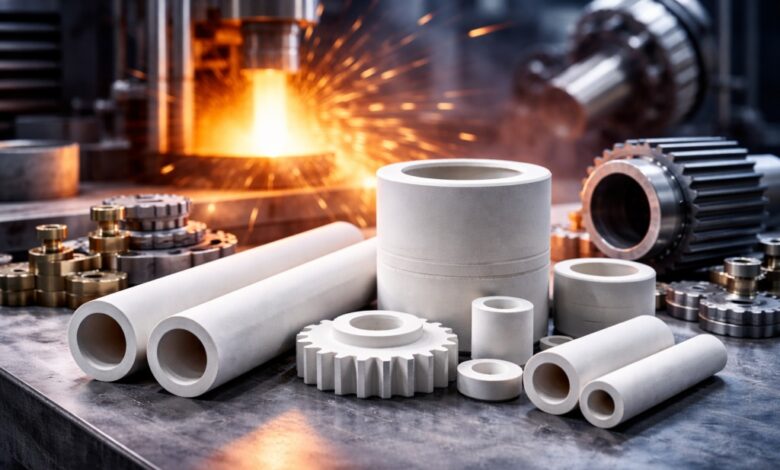
In continuous-process industries such as industrial heating, energy generation, chemical processing, and advanced manufacturing, components are exposed to repeated thermal cycling, chemical attack, and mechanical stress. Under these conditions, even well-designed systems may underperform if material selection is not aligned with real-world operating demands. This is where alumina tube components designed for continuous high-temperature industrial systems are commonly referenced in engineering discussions focused on reliability rather than short-term performance.
Understanding how material stability interacts with heat, time, and load is essential for preventing premature failures and unplanned downtime.
Why High-Temperature Systems Fail Despite Sound Design
Many industrial systems are designed with sufficient thermal margins on paper. Yet failures still occur because materials behave differently over time than they do in initial qualification tests. High temperatures accelerate diffusion, oxidation, creep, and microstructural changes that are not always apparent during early-stage testing.
Common failure mechanisms include:
- Thermal fatigue caused by repeated heating and cooling cycles
- Gradual loss of mechanical strength at elevated temperatures
- Chemical degradation due to reactive atmospheres
- Microcrack formation that propagates under long-term stress
These issues often remain undetected until performance degradation becomes operationally significant.
Material Stability as a Long-Term Reliability Factor
Material stability refers to a material’s ability to maintain its mechanical, thermal, and chemical properties over extended exposure to harsh conditions. In high-temperature industrial systems, stability is often more critical than peak strength or short-term resistance.
Engineers increasingly focus on stability metrics such as:
- Resistance to thermal shock
- Dimensional consistency under prolonged heat
- Chemical inertness in reactive environments
- Predictable aging behavior
Materials that exhibit stable behavior reduce maintenance intervals, lower inspection frequency, and improve overall system predictability.
The Role of Structural Ceramics in High-Heat Applications
Structural ceramics are widely used in high-temperature systems due to their inherent resistance to heat, corrosion, and wear. Unlike metals, many ceramics retain their strength and structural integrity at temperatures where conventional alloys begin to deform or oxidize.
In industrial processing environments, ceramic components are often selected for:
- Furnace tubes and thermal barriers
- Reaction vessels and containment components
- Insulating supports exposed to radiant heat
In prolonged high-heat processing scenarios, alumina crucible materials used in prolonged high-heat industrial processing are frequently discussed in relation to dimensional stability and chemical resistance rather than throughput or productivity metrics.
Continuous Operation vs. Intermittent Exposure
One of the most overlooked distinctions in material selection is the difference between intermittent and continuous high-temperature exposure. Materials that perform adequately during short-duration heating cycles may degrade rapidly when subjected to constant thermal loads.
Continuous-operation systems introduce challenges such as:
- Cumulative thermal creep
- Progressive grain growth
- Slow chemical diffusion processes
Selecting materials based solely on maximum temperature ratings without considering exposure duration often leads to underestimating long-term degradation risks.
Cost of Instability: Downtime, Rework, and Risk
Material instability rarely fails suddenly. Instead, it manifests as gradual efficiency loss, increased maintenance frequency, and unpredictable downtime. These secondary effects often carry higher costs than the initial material investment.
Indirect costs associated with unstable materials include:
- Production interruptions
- Increased inspection and replacement cycles
- Reduced process consistency
- Elevated safety and compliance risks
From a systems-engineering perspective, material stability directly influences lifecycle cost, not just component cost.
Engineering for Stability Rather Than Margin
Modern industrial engineering increasingly prioritizes operational stability over theoretical performance margins. This shift reflects a broader understanding that systems must remain predictable over years of service, not just meet initial specifications.
Key strategies include:
- Matching material behavior to real thermal profiles
- Evaluating long-term exposure effects during design
- Prioritizing consistency over peak performance
- Integrating material data into system-level risk assessments
This approach reduces uncertainty and improves decision-making across design, procurement, and maintenance teams.
Conclusion
In high-temperature industrial systems, material stability often determines long-term success more than system design alone. As operating environments become more demanding and uptime expectations increase, engineers must look beyond initial performance metrics and focus on how materials behave over time.
By prioritizing stability, resistance to degradation, and predictable aging behavior, industrial systems can achieve higher reliability, lower total cost of ownership, and reduced operational risk. In many cases, the weakest link is not the design itself—but the material chosen to endure the heat.