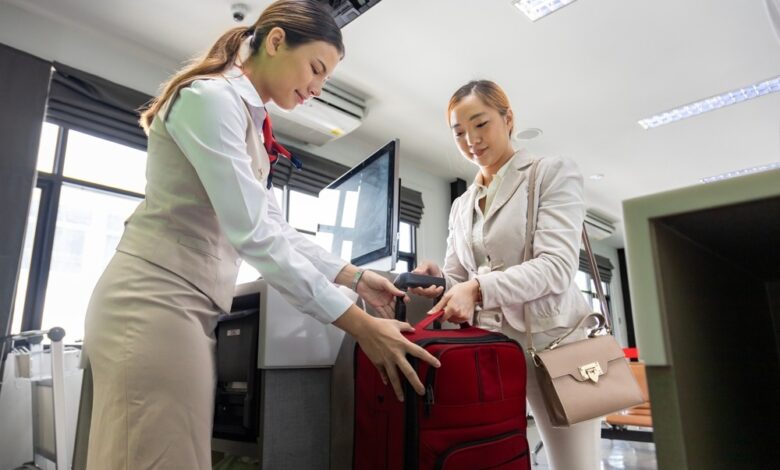
Airlines have become skilled at selling add-ons like bags, seats, and meals. Letting you change or refund them is where many still fall short — and that gap shows up the moment your plans shift.
Selling extras has become a $150 billion habit
Not long ago, buying a flight meant buying one thing: a seat from one city to another, at one price. That is no longer how airlines think. Over the past decade they have steadily broken the trip into parts they can sell separately — a checked bag, a chosen seat, extra legroom, priority boarding, a meal, lounge access, and bundles that repackage a few of these back together as a “deal.”
The money involved is not a side note. According to PhocusWire, drawing on a white paper on modern airline retailing by LeapShift and Airline Information, add-on sales like these were worth close to 150 billion dollars in 2024, and for some carriers they now make up as much as a fifth of total revenue. To see why that is so important, hold it against another figure from the same reporting: the airline industry’s average profit margin in 2025 was only a few percent. In other words, the extras are not topping up healthy profits — for many airlines they are the difference between making money and losing it.
So the drive to sell add-ons is not a passing trend or a gimmick. It is now central to how airlines survive, and it is the reason a single flight reaches you as a long menu of choices, each with its own price and its own small decision. Airlines have become, in effect, online shops — and like any shop, they have become very good at the selling half of the job.
But most can’t cancel, amend, or refund on their own site
Being a shop has a second half, though: what happens after the sale, when a customer wants to change an order, cancel it, or get their money back. Here the same research found airlines are strikingly behind.
The figures are blunt. Asked whether their own website could handle these basic after-sale tasks, only about a third of airlines said it could cancel a booking. Slightly more — under four in ten — could amend one. Fewer still could process a refund online. And these are the airlines’ own direct channels, the part of the business they control most tightly and have every reason to get right. If even the airline’s own website struggles this much, the wider picture across every way a ticket can be sold is messier still.
For a traveler, this gap stays invisible right up until the moment it matters. You booked the flight, added a bag, picked a seat, maybe took the bundle — all in a few smooth taps. Then life changes: the meeting moves, someone falls ill, the trip shifts by a day. You go looking for the same smooth way to undo or adjust what you bought, and it is not there. Instead there is a phone line, a long wait, a form, or a flat “sorry, that cannot be done online.” The sale took thirty seconds; the change takes an afternoon. That imbalance — effortless to buy, painful to fix — is the single weakest point in airline retailing today, and it arrives at the worst possible time for the person caught in it.
Airpaz works to pull changes and refunds into one place
This after-sale gap is where Airpaz‘s Chief of Architecture, John Wang, says a booking site has to do the work the airlines have not finished — precisely because it sits between the traveler and hundreds of different carriers.
“When you book across hundreds of airlines, every one of them handles changes and refunds differently, and some barely handle them at all,” he says. “We cannot make an airline’s rules simpler than they are. What we can do is pull the after-sale steps — rescheduling, refunds, special requests — into one place, so you deal with us in one consistent way instead of chasing each airline in its own. The aim is that the part after you book is as clear as the part before it, even when the airline behind it was never built for that.”
He is direct that this, not the selling, is the harder and more important half of the job.
“Anyone can show you a price and take your money — that part is easy now, and everyone does it,” he says. “The work that actually earns trust is what happens when a plan changes. That is the moment a booking either holds together or falls apart for you, and it is where we put a lot of effort that you never notice when everything goes smoothly.”
The airline’s rules still set what’s possible
It would be dishonest to suggest a booking site can make all of this disappear. Airpaz does not write the airlines’ rules, and it cannot turn a non-refundable fare into a refundable one, or wave away a change fee a carrier has chosen to charge. When an airline’s own systems are slow, strict, or simply cannot perform a task, some of that reaches the traveler no matter who they booked through.
What a single, consistent place to manage a booking can remove is the second problem that usually stacks on top of the first: the confusion and wasted effort of dealing with every airline in a different way, through a different channel, in different words. The fees and the rules belong to the airline. Making them clear, and making the steps to deal with them as simple as they can be, is the part a booking site can own. And as airlines keep adding more things to sell, that after-sale clarity does not matter less. It becomes the thing that decides whether all those extras were worth buying in the first place.