David Szalay Biography: A Powerful Voice Redefining Modern Literary Fiction

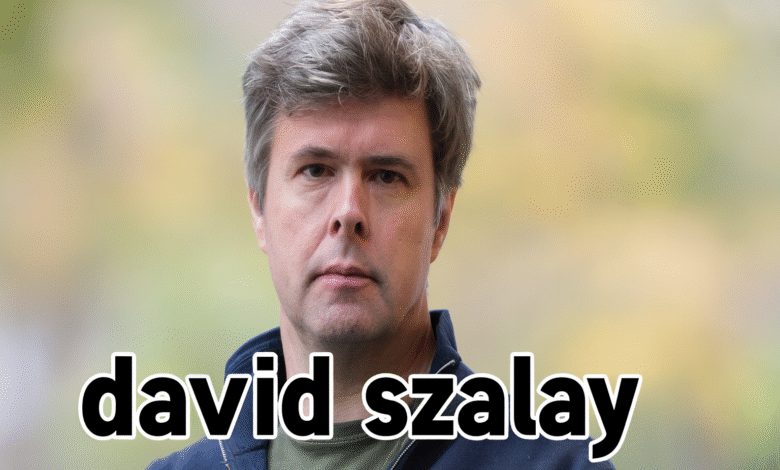
Table of Contents
ToggleIntroduction
David Szalay is one of the most influential contemporary novelists writing in English today. Known for his restrained prose, innovative narrative structures, and penetrating insight into modern life, Szalay has steadily built a reputation for fiction that is both intellectually rigorous and emotionally resonant. His work captures the uncertainties, moral tensions, and quiet struggles of individuals navigating a globalised world. While his writing is often subtle and controlled, its impact is profound, earning him international recognition and some of the highest honours in modern literature.
Despite his success, David Szalay remains a private and thoughtful figure. He allows his work to speak louder than his personal life, focusing on the craft of storytelling rather than public spectacle. This balance between artistic ambition and personal restraint has become a defining feature of his literary identity.
Quick Bio: David Szalay
| Detail | Information |
|---|---|
| Full Name | David Szalay |
| Year of Birth | 1974 |
| Birthplace | Montreal, Quebec, Canada |
| Nationality | Canadian, British, Hungarian |
| Education | University of Oxford (English Literature) |
| Profession | Novelist, Writer |
| Known For | Literary fiction, Booker Prize–winning work |
| Residence | Vienna, Austria |
Early Life and Background
David Szalay was born in 1974 in Montreal, Canada, into a family with international roots. His father is Hungarian, and his mother is Canadian, a background that exposed him early to different cultures and perspectives. During his childhood, his family moved to Beirut before later settling in London due to political instability in the region. These early experiences of displacement and transition would later shape the themes of movement, identity, and belonging in his writing.
Growing up in London, Szalay developed an early interest in literature and language. He was educated in the British school system, where his academic strengths became evident. The experience of living between cultures gave him a nuanced understanding of modern identity, a quality that would later define his fictional characters.
Education and Intellectual Formation
David Szalay studied English at the University of Oxford, one of the most prestigious academic institutions in the world. His education there refined his analytical skills and deepened his engagement with classic and modern literary traditions. Rather than immediately pursuing a writing career, he took time to explore other professional paths, which provided real-world experience that later informed his fiction.
This combination of academic training and lived experience gave Szalay a distinctive voice. His writing is intellectually grounded yet never detached from the realities of everyday life. He writes about ordinary people with extraordinary clarity, avoiding sentimentality while maintaining emotional depth.
The Start of His Writing Career
Szalay began his creative career writing radio drama, producing work for BBC Radio. This early experience sharpened his sense of dialogue, pacing, and narrative economy. Writing for audio taught him how much meaning could be carried in a single line or moment of silence, a skill that later became central to his fiction.
His transition to novel writing was gradual but deliberate. He approached fiction with discipline, focusing on form as much as content. From the beginning, his work showed a commitment to exploring human behaviour honestly, without exaggeration or moral judgement.
Literary Career and Major Works
David Szalay’s debut novel immediately attracted critical attention for its originality and precision. He quickly established himself as a writer willing to experiment with structure while remaining deeply concerned with character and theme. Across his body of work, he often uses interconnected narratives, fragmented perspectives, and restrained storytelling to reflect the complexity of modern life.
His novels explore themes such as masculinity, power, vulnerability, ambition, and moral uncertainty. Rather than offering clear resolutions, Szalay invites readers to sit with discomfort and ambiguity. This approach has earned praise for its realism but has also drawn criticism from readers who prefer more conventional storytelling. This tension between admiration and challenge is a defining aspect of his literary reputation.
Style, Themes, and Critical Reputation
Szalay’s writing style is often described as minimalist, but this simplicity is deceptive. Beneath the clean prose lies careful construction and psychological depth. He avoids dramatic flourishes, instead allowing meaning to emerge through action, silence, and implication.
Critics frequently note his ability to capture the emotional undercurrents of modern masculinity without relying on stereotypes. His characters are flawed, introspective, and often uncertain, reflecting broader social anxieties. While some critics argue that his work can feel emotionally distant, others praise its honesty and restraint, viewing it as a powerful alternative to more expressive forms of fiction.
Awards, Recognition, and Global Impact
Over the years, David Szalay has received significant literary recognition, culminating in the Booker Prize for one of his later novels. This achievement cemented his position among the leading voices of contemporary literature and introduced his work to a wider international audience.
His books have been translated into numerous languages, demonstrating their global relevance. Readers across cultures connect with his exploration of universal themes such as isolation, desire, and moral responsibility. His success reflects not only individual talent but also the growing appreciation for literary fiction that challenges readers intellectually and emotionally.
Personal Life and Public Image
David Szalay maintains a low public profile and shares limited personal information. He is married and lives in Vienna, Austria, where he continues to write. He rarely engages in self-promotion, preferring to let his work stand on its own merit.
This privacy has contributed to an image of seriousness and integrity, though some critics argue it makes him less accessible to mainstream audiences. Nonetheless, his commitment to craft over celebrity has earned him respect within literary circles.
Legacy and Influence
David Szalay’s legacy lies in his contribution to a quieter, more reflective form of modern fiction. He has shown that powerful storytelling does not require spectacle, only precision, honesty, and emotional intelligence. His work has influenced a new generation of writers interested in exploring contemporary life with nuance and restraint.
While his fiction may not appeal to every reader, its impact on modern literary culture is undeniable. He stands as a reminder that literature can still challenge, unsettle, and illuminate without shouting for attention.
Conclusion
David Szalay is a writer of rare discipline and insight. His career reflects a careful balance between innovation and tradition, ambition and restraint. Through his novels, he has reshaped how contemporary fiction can engage with modern life, offering stories that are quietly powerful and deeply resonant. Whether admired for his clarity or questioned for his emotional distance, Szalay remains an essential voice in twenty-first-century literature.
Frequently Asked Questions (FAQ)
Who is David Szalay?
David Szalay is an internationally recognised novelist known for his modern literary fiction and Booker Prize–winning work.
Where was David Szalay born?
He was born in Montreal, Canada.
What is David Szalay known for?
He is known for his minimalist prose, innovative narrative structures, and exploration of modern identity.
Where does David Szalay live now?
He lives in Vienna, Austria.
Has David Szalay won major literary awards?
Yes, he has received several major literary honours, including the Booker Prize.
What themes does David Szalay explore in his novels?
His work often explores masculinity, power, vulnerability, identity, and moral uncertainty in contemporary life.