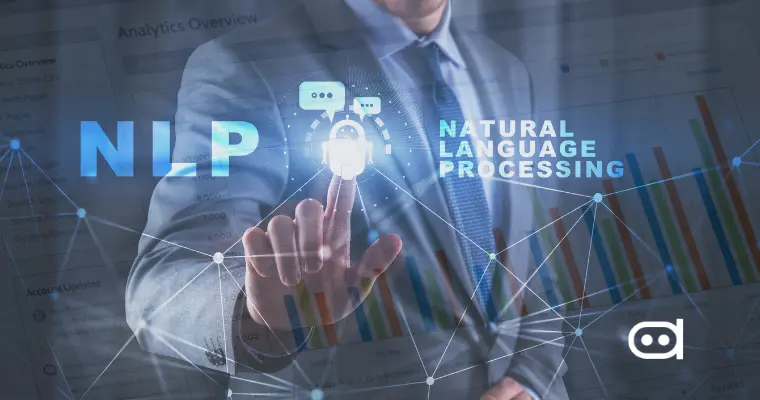
Market forecasts in 2026 are no longer assessed based on the ability to accurately decode past trends. Analysts are expected to identify trends quickly and provide clear explanations and decision-making directions in close to real-time environments. This has contributed to the advancement of analytics platforms to exceed the capabilities of basic dashboard and report-conveying platforms. The technology in the middle of this advancement is data analyst AI with its NLP component for intelligence delivery.
It is important to clarify one thing at the beginning. Analytics has remained the study of analyzing data to respond to business questions. NLP has not replaced analytics, and AI has not become AI making decisions. On the contrary, AI has reinforced analytics by enabling faster discovery, explanation, and communication of insights. NLP has become an essential link for analysts between data and decisions.
What NLP means in the analytics context
Natural language processing is the technology that enables machines to understand and interpret human language and generate language. Analytics In analytics, NLP operates on top of structured data models and analytics logic. It takes numeric patterns, statistical changes, and relationships and translates them into explanations that analysts can quickly understand.
Instead of making analysts write complicated queries or interpret charts themselves, NLP can allow analysts to ask plain English questions and receive direct answers. This is now fundamental to modern AI for data analyst applications, as organizations desire speedier access to insight without sacrificing analytical rigor.
How NLP Helps Increase Insight Generation for Analysts
Insight generation is a long process involving data preparation, interpretation, analysis, and final explanation. The role of NLP is to speed up the latter two stages without a change to the analytical foundation.
The process begins with the evaluation of data using principles and algorithms of statistics and machine learning, followed by the adoption of NLP for translating the same into structured explanations. For example, rather than explaining just why revenues dropped, those explanations could have pointed out the drivers that caused this to happen, like regional performance, pricing structures, or alteration of customer behavior.
The AI making decisions is often the realm of confusion. But in reality, NLP supports an analyst explaining. The analyst must still evaluate the explanation, provide business context, and decide on correlating actions.
Translating Complex Patterns to Business Language
This creates one of the biggest challenges for any analyst: communicating findings to stakeholders who are not data experts. NLP solves this problem by turning complex analytical outputs into accessible narratives.
For example, NLP might summarize multi-variable trends, point out anomalies, and describe correlations using concise and proper language. Instead of presenting several charts, analysts can share a clear explanation, aligning data behavior with business outcomes. This strengthens collaboration and ensures that insights will lead to an informed discussion rather than confusion.
Data analyst AI powered by NLP becomes for the analysts a communication amplifier, not just an analytical tool.
Enhancing Decision Cycles with Minimum Error
Speed is important in competitive markets today. However, speed that is not accurate is risky. It is important to note that NLP increases the speed of data interpretation while enabling traceability.
Explanations provided by AI systems would relate to fundamental measures, timescales, and driving forces. By these means, analysts can confirm these explanations, zoom in if required, and communicate their findings confidently to managers. This approach would allow managers to reach their decisions quickly while their own judgment is still fully in charge.
This is important. While decision support comes from the use of analytics derived from NLP, the making of autonomous AI decisions is not automated using AI algorithms.
A key point here is that while humans are analyzing sentences, computers are analyzing meaning.
Areas Where NLP Adds Maximum Value
As interpreted through the principles of NLP, there is a rather marked impact in areas like:
- Performance analysis – AI explains the acute events on the dashboard
- Trend tracking – Identifies emerging patterns in preliminary correlations
- Interpreting the prediction – Scrutinizing the reasons driving them
- Root-cause analysis – Sorting and presenting responsible factors
Such NLP interventions reduce the cognitive burden on the neural processes of the analyst and divert their prime focus to the strategic evaluation and not manual interpretation.
How AskEnola uses NLP for Analysts
AskEnola uses NLP with an emphasis on a business-first approach. The AskEnola platform does not view language as a workaround for analytics. Instead, NLP allows for the provision of answers after analysis has taken place.
AskEnola’s solution is centered around answering what users are really asking in doing analysis: “what has changed, why has this happened, and what is likely to happen in the future.” Thus, through converting analysis answers into natural language, AskEnola enables analysts to rapidly transition from the processes of data exploration and analysis into decision-making without losing context and accuracy in the process.
Why NLP Will Make the Greatest Difference in 2026
As the data universe burgeons and decision times shrink, the clear explanation of what the insights mean is poised to have equal relevance to the insights themselves. The NLP serves as the bridge to explain insights understandably to as many stakeholders as possible.
This implies business analysts spend fewer hours each day deciphering output and more hours advising strategy. Augmented NLP then strengthens the role of analysts as the trusted interpreters of business reality rather than being a bunch of generators of merely reports.
NLP is actually redefining the delivery of insights, not analysis itself. By allowing for results from analysis to be explained in a linguistic way, NLP will enable analysis teams to accomplish more quickly, communicate effectively, and make decisions confidently. By 2026, analysis teams will have incorporated data analyst AI, ensuring human output for analysis judgment and implementation.
AskEnola demonstrates the use of NLP in a responsible manner to add vigor to analytics by ensuring that the generation of insights is not left in the hands of autonomous AI systems. When AI explains, and analysts decide, organizations achieve understanding, speed, and confidence in data-driven decision-making.