Mariana Enríquez: A Powerful Voice of Modern Gothic Literature

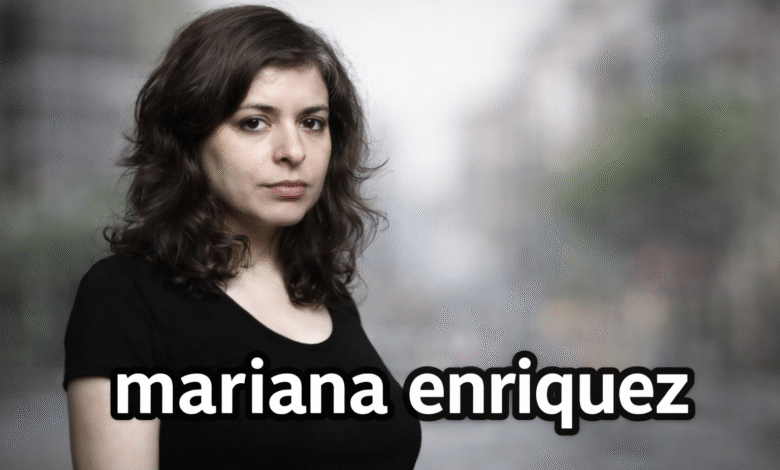
Table of Contents
ToggleIntroduction
Mariana Enríquez is widely regarded as one of the most influential literary voices to emerge from Latin America in recent decades. Known for her unsettling yet deeply human stories, she has redefined contemporary horror by blending the supernatural with social realism. Her work is praised for its originality and emotional depth, yet some readers find its darkness disturbing and confrontational. This contrast—between literary brilliance and emotional discomfort—has become a defining feature of her global reputation.
Born and raised in Argentina, Mariana Enríquez writes stories that feel intensely local yet universally resonant. Her fiction explores fear, violence, memory, and marginalization, often drawing from real social wounds. While her success has brought international acclaim, her writing does not seek comfort. Instead, it challenges readers to face uncomfortable truths, making her work both celebrated and controversial.
Quick Bio
| Field | Details |
|---|---|
| Full Name | Mariana Lorena Enríquez Ledesma |
| Known As | Mariana Enríquez |
| Date of Birth | 6 December 1973 |
| Birthplace | Buenos Aires, Argentina |
| Nationality | Argentine |
| Profession | Novelist, short story writer, journalist |
| Education | Journalism and Social Communication |
| University | National University of La Plata |
| Literary Genres | Horror, gothic fiction, social realism |
| Active Years | 1990s–present |
Early Life and Education
Mariana Enríquez was born in Buenos Aires and spent her early years in the Greater Buenos Aires area before moving to La Plata. Growing up during a period of political memory and social tension in Argentina, she was exposed early to stories shaped by fear, silence, and unresolved trauma. These influences later became central to her fiction, where personal and collective histories often collide.
She studied Journalism and Social Communication at the National University of La Plata. During her student years, she immersed herself in music, punk culture, and underground literature. This environment shaped her sharp narrative voice—direct, unpolished, and emotionally honest. Unlike many writers who begin cautiously, Enríquez entered literature with boldness and urgency, refusing to soften the realities she observed.
Start of Her Literary Career
Mariana Enríquez began her professional writing career at a young age. Her debut novel was published in the mid-1990s, marking her arrival as a fearless new voice in Argentine fiction. The novel explored youth, excess, and emotional instability, receiving mixed reactions. Some critics praised its raw honesty, while others criticized its intensity. This early division foreshadowed the polarized responses her work would continue to provoke.
At the same time, she built a parallel career in journalism. Writing for cultural publications allowed her to refine her observational skills and deepen her understanding of society. Journalism gave her discipline and precision, while fiction offered freedom and imagination. The combination became one of her greatest strengths.
Journalism and Cultural Work
Alongside her literary output, Mariana Enríquez has maintained a strong presence in cultural journalism. She has worked for major Argentine media outlets, contributing essays, interviews, and cultural criticism. Her journalism often focuses on literature, music, social issues, and marginalized voices.
This dual career has influenced her fiction in powerful ways. Her stories feel grounded in reality because they are shaped by real observations. At the same time, her journalistic work benefits from her literary sensibility, making her cultural commentary vivid and engaging. This balance between fact and imagination defines her professional identity.
Rise as a Master of Modern Horror
Mariana Enríquez gained international recognition through her short story collections, which brought a fresh and unsettling perspective to horror literature. Rather than relying on traditional monsters, her stories present fear as something embedded in everyday life—abandoned houses, broken communities, forgotten children, and unspoken violence.
Her horror is often quiet and psychological, yet deeply disturbing. Readers praise her ability to create atmosphere and emotional tension, while critics note how her stories expose social inequality and historical trauma. Some readers struggle with the bleakness of her themes, but many argue that this darkness is precisely what makes her work honest and necessary.
Major Novels and Global Recognition
Her novels expanded her reputation beyond short fiction, particularly one major work that earned significant international awards and critical acclaim. This novel blended family drama, political history, and occult horror into a complex narrative that resonated with readers worldwide.
Through her novels, Mariana Enríquez demonstrated that horror could be literary, ambitious, and emotionally profound. Her success helped redefine genre boundaries, proving that dark fiction could compete at the highest levels of global literature. While praised for her ambition, she has also faced criticism from readers who find her work emotionally demanding.
Writing Style and Themes
Mariana Enríquez’s writing style is direct, atmospheric, and deeply sensory. She often uses simple language to describe disturbing events, making her stories feel disturbingly real. Her themes include fear, gendered violence, poverty, memory, and the lingering effects of political trauma.
A positive aspect of her work is its honesty and emotional depth. A negative aspect, for some readers, is its refusal to offer comfort or resolution. Her stories rarely end neatly, reflecting the unresolved nature of the realities she portrays. This tension between beauty and brutality is central to her literary identity.
Influence and Cultural Impact
Mariana Enríquez has influenced a new generation of writers who see horror as a tool for social commentary rather than escapism. Her work is studied in academic settings and discussed at international literary festivals. She has helped bring global attention to contemporary Argentine literature and expanded the possibilities of genre fiction.
Her influence extends beyond literature into cultural conversations about memory, violence, and marginalized lives. By refusing to dilute her themes, she has earned respect as a writer who prioritizes truth over comfort.
Conclusion
Mariana Enríquez stands as a powerful and uncompromising voice in modern literature. Her work is admired for its originality and courage, yet criticized by some for its darkness and emotional intensity. This balance of praise and discomfort defines her legacy. She does not write to please everyone; she writes to reveal what many prefer to ignore. In doing so, she has secured her place as one of the most important writers of her generation.
Frequently Asked Questions
Who is Mariana Enríquez?
Mariana Enríquez is an Argentine novelist, short story writer, and journalist known for her gothic and horror-influenced fiction.
What genre is Mariana Enríquez famous for?
She is best known for literary horror and gothic fiction blended with social realism.
Where was Mariana Enríquez born?
She was born in Buenos Aires, Argentina.
What makes Mariana Enríquez’s writing unique?
Her ability to combine supernatural horror with real social and historical issues sets her apart.
Is Mariana Enríquez internationally recognized?
Yes, her work has received major international awards and has been translated into many languages.