For a long-term investment, Slate (Stone Resin) shower trays are the superior choice. They are incredibly rigid, do not “flex” under weight (which prevents leaks), and feature a natural anti-slip texture. However, if you are on a tight budget or have a weak floor structure, Acrylic is a fantastic, lightweight, and cost-effective alternative that is much warmer to the touch on a cold UK morning.
Making a choice between slate effect vs acrylic is a topic that comes up in almost every UK bathroom renovation. For years, the standard white acrylic tray was the only option, but recently, slate-effect (stone resin) trays have taken over our Instagram feeds.
If you are currently choosing between the two, you aren’t just picking a colour but choosing how your bathroom will handle the weight, the water, and the wear and tear of a busy British household. I’ve seen both installed in everything from narrow Victorian ensuites to ultra-modern new builds, and the “best” choice depends entirely on what you value most: budget or durability.
In this blog, we will compare acrylic and slate effect shower trays, helping to choose what’s best for your bathroom.
1. Slate-Effect Trays
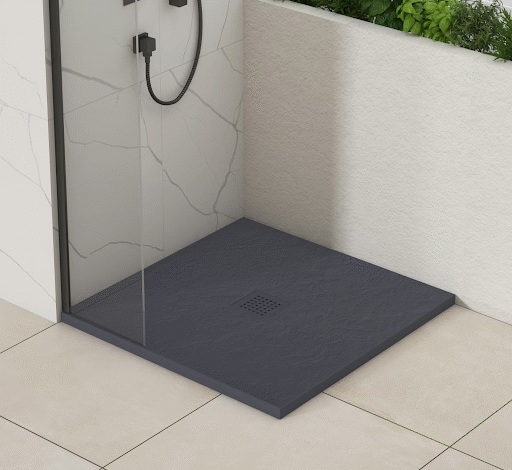
Slate-effect trays are usually made from a mixture of crushed stone and resin. They are heavy, solid, and feel like a permanent part of the house. my favourite thing about stone resin is that it doesn’t move. In the UK, we often have timber floors that move slightly. If your shower tray “flexes” when you stand on it, the silicone seal around the edges will eventually snap, leading to a hidden leak. Slate trays are too rigid to flex, making them a much safer “investment” for your floorboards. Natural slate texture isn’t just for looks. It provides a built-in anti-slip surface. In a wet environment, this is a massive safety bonus that acrylic simply can’t match without added stickers or mats. These trays fit perfectly with the “Midimalist” and “Nature-Inspired“ bathroom that is latest trend. Pairing a charcoal slate tray with a quadrant or Offset Quadrant enclosure creates a high-end, spa-like contrast that makes a small bathroom look expensive.
2. Acrylic Trays
Acrylic shower trays are most common and inevitably popular in the UK. So, don’t dismiss acrylic just because it’s the “budget” option. Modern acrylic trays are reinforced with wood or glass fibre, making them much tougher than the flimsy versions from twenty years ago. Warmth is the big one for UK winters. Stone resin stays cold for a long time. Acrylic is an insulator, meaning it feels warm the moment your bare feet touch it.
A 1200mm slate tray can weigh 40kg If you are doing a DIY install or have a plumber working alone, an acrylic tray is much easier to handle. It’s also the better choice for upstairs bathrooms where you might be worried about adding too much weight to old joists. You can often buy a high-quality acrylic tray and a quadrant shower enclosure for the price of a slate tray alone. If you are renovating a rental property or a guest “cloakroom,” acrylic is often the smarter financial move.
Technical Comparison: Slate vs. Acrylic
| Feature | Slate (Stone Resin) | Acrylic (Fibreglass Reinforced) |
|---|---|---|
| Durability | Extremely High (won’t scratch easily) | Moderate (can scratch over time) |
| Feel | Cold, solid, and textured | Warm, smooth, and slightly flexible |
| Weight | Very Heavy | Lightweight |
| Maintenance | Hides limescale well (if textured) | Easy to wipe but shows soap scum |
| Investment Value | High (adds “premium” feel to home) | Low (standard functional choice) |
The “Hard Water” Reality Check
If you live in a hard water area like London or the South East, you need to consider the “Chalky Haze” problem.
Slate: Because slate is matte and textured, white limescale can sometimes get trapped in the “pores” of the slate effect. I recommend choosing a Light Grey or White Slate rather than Black if you don’t have a water softener.
Acrylic: Being non-porous and glossy, limescale sits on top. It’s easier to wipe off, but it’s much more visible. Like a Gloss Vanity Unit, it requires a “wipe-and-go” habit to keep it looking fresh.
My Personal Expert Tip
Everyone wants a “Slimline” or “Low Profile“ tray (around 25mm–30mm high). They look sleek, especially with an Offset Quadrant. However, you need to be careful here, If your UK bathroom has plumbing that runs above the floor (common in old flats), a slimline tray won’t work unless you build a “plinth” to raise it up. If you have to raise a slate tray, it can look bulky. In these cases, sometimes a standard easy-plumb acrylic tray with a matching removable panel is actually the neater, more professional-looking solution.
Summing It Up
- Choose Slate if: You want a “forever” bathroom, you hate the feeling of a “bouncy” shower floor, and you want that high-end, textured look that adds genuine value to your home.
- Choose Acrylic if: You are on a budget, you want a warm surface for your feet in the morning, or you are worried about the structural weight on an upper-floor renovation.
Both types are available in various shapes such as square, rectangular, and quadrant shower trays. For me, the solid, slip-resistant peace of mind you get from a Slate Stone Resin tray makes it the winner for any master bathroom upgrade.