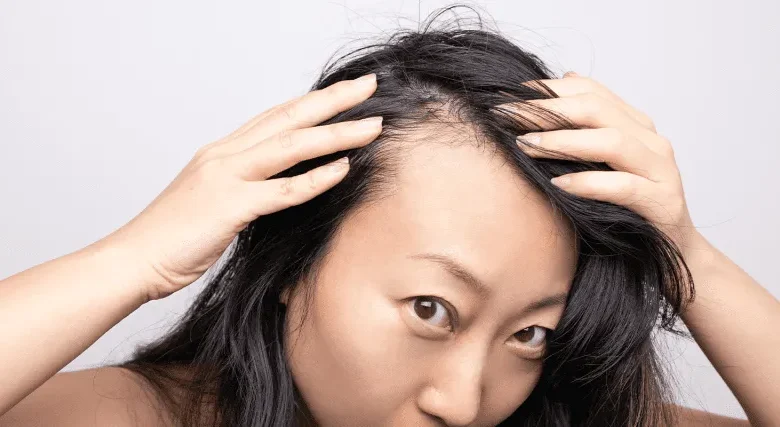
Hair loss: one of the scariest beauty concerns out there. While some folks may say hair loss is just an aesthetic issue, anyone dealing with hair loss can tell you that the condition affects more than your scalp. With hair loss, you may suffer from low self-esteem, and even anxiety or depression. What further doesn’t help these feelings are several long-held myths about hair loss, such as there are no effective hair treatments (false.) In fact, Exosome Therapy Scalp Restoration can help regrow hair—without surgery, and without pain.
Here’s the truth you need to know behind the myths of hair loss.
Myth #1: Hair regrowth treatments don’t work
Several restoration therapies, such as Exosome Therapy, can help trigger regrowth. Part of why the myth exists that hair treatments don’t work is due to the belief that any hair loss is always permanent.
Myth #2: Any hair loss you experience is permanent
False. It’s possible to experience hair shedding that is then followed by a period of regrowth. For example, hair shedding caused by stress, hormonal changes, and nutritional deficiencies can be addressed with lifestyle changes (such as healthy diet and exercise), scalp treatments, and medication.
Myth #3: Washing your hair too much causes hair loss
Shampooing your hair doesn’t kill or scar follicles (which causes hair loss). Rather, those strands you’re seeing in the sink are likely part of your scalp’s natural process of shedding loose hairs. How so? Each strand on your head goes through a natural growth cycle, which consists of 3 stages:
-
- the anagen, or growth, phase
- the catagen, or transition, phase
- the telogen, or resting to shedding, phase
Note that’s it’s entirely normal to lose up to 100 strands of hair every day. If you have a healthy scalp and note no issues in your scalp (i.e., you don’t notice scalp thinning or bald patches), any strands you lose daily are likely naturally shedding. And remember for every hair naturally shed, other hairs on your scalp continue to grow.
Myth #4: Only men experience hair loss
Women can also experience hair loss. Unlike male pattern baldness, which usually presents as balding at the crown and temples, female pattern baldness typically results in overall thinning of the scalp, and/ or a widening of the center part
Myth #5: Hair loss occurs only due to genetics or stress
While genetics and stress can cause hair shedding, other factors exist that can cause hair shedding and hair loss. For example, hormonal changes (such as pregnancy and postpartum) can cause some women to experience temporary hair shedding. Medical conditions and certain medications can also affect hair growth. For example, autoimmune conditions can also cause hair loss.
Myth #6: Brushing or combing wet hair causes hair loss
It’s true that brushing or combing wet hair can cause breakage, due to the hair’s cuticle (the outer layer) lifting up when damp. But this is mechanical breakage, not actual hair loss occurring at the follicle. To avoid mechanical breakage, brush your hair before showering so it’s already tangle free, then wait to comb again until your hair is nearly dry.
Myth #7: Your mom’s genetics determine whether you lose your hair or not
The truth is you can inherit hair loss from either parent. Hair loss is polygenic, which means hair loss results from many genes interacting together, from both sides of your family.
Myth #8: Cutting your hair can prevent hair shedding
False. Trimming the ends does not affect the roots of your hair. Still, trims are good idea to clear up split ends and give your hair a fuller, healthier look.
Myth #9: Wearing hats can make you bald
Hats themselves do not cause baldness. Rather, bacteria on a dirty hat can cause an infection on a scalp, which may lead to hair loss. If you regularly wear hats, wash, clean, and swap out hats so you always wear a clean (or relatively clean) cap.
Myth #10: Too much sunlight can cause hair loss
False. While UV rays can lighten and dry out strands, sunlight itself does not cause actual hair loss. Why? Your hair follicles still function with exposure to UV rays.
This article was written by Leah Campbell for Third Loft Marketing.