Revolutionizing Connectivity: The Latest Advances in Fibre Splicer Technology

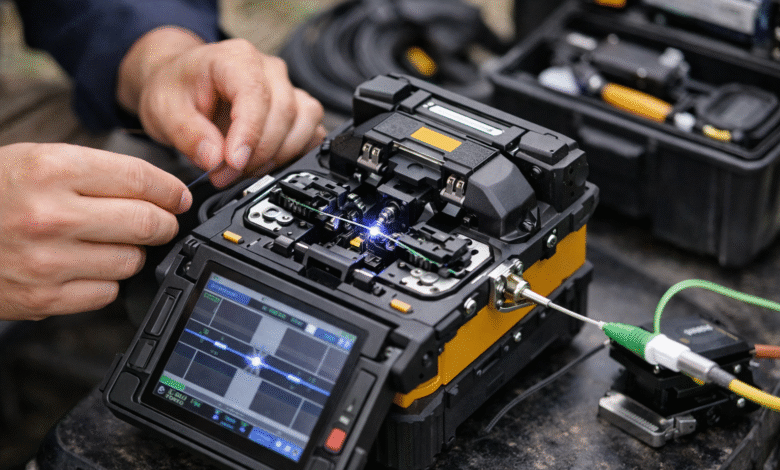
In today’s digital era, where connectivity is paramount, the demand for efficient and reliable fibre optic networks has skyrocketed. Central to these networks is the fibre splicer, a vital tool that ensures seamless and robust connections. Innovative advancements in fibre splicer technology are revolutionising the field, making it easier and more efficient to connect fibre optic cables.
Understanding the Role of Fibre Splicers
Fibre splicers are instrumental in joining two optical fibres end-to-end, ensuring that light signals pass through with minimal disruption. This process is crucial for maintaining the integrity and speed of data transmission across vast distances. Modern fibre splicers are equipped with advanced features that significantly enhance performance and reliability.
Recent Technological Advancements
The latest fibre splicer models boast several technological advancements. Automated splicing and alignment features have reduced the need for manual intervention, thereby increasing efficiency and accuracy. Moreover, improvements in core alignment technologies allow for higher precision in fibre alignment, significantly reducing splice loss.
Laser-Based Splicing Techniques
One groundbreaking improvement is the use of laser-based splicing techniques. This technology utilises lasers for precise heating and fusing of fibres, which results in cleaner and more reliable splices. The precision of laser-based methods translates into better signal quality and reduced maintenance costs.
Enhancements in Durability and Portability
Modern fibre splicers are becoming more durable and portable. Manufacturers are now focusing on making devices that are robust enough for field use, yet light enough for easy transport. Enhanced durability ensures that splicers can withstand harsh environments, reducing the likelihood of device failure during critical operations.
Importance of User-Friendly Interfaces
The integration of user-friendly interfaces in fibre splicers has also been a significant development. Intuitive touchscreens and simplified operation routines make these devices accessible to technicians at varying skill levels. Such advancements have expedited training processes and reduced the margin of error during operations.
The Impact of AI and Machine Learning
Artificial Intelligence (AI) and Machine Learning (ML) are playing an increasing role in fibre splicing technology. These technologies enable splicers to automatically adjust settings based on environmental conditions and fibre types, enhancing the adaptability and efficiency of the splicing process.
Connectivity in Remote Areas
Advancements in fibre splicer technology have also opened avenues for better connectivity in remote and underserved areas. Portable splicers allow technicians to deploy high-speed internet services in places where traditional methods were previously challenging. This is crucial for bridging the digital divide and ensuring equitable access to digital resources.
Future Outlook for Fibre Splicer Technology
The future of fibre splicer technology is promising, with ongoing research focusing on further reducing splice time, enhancing precision, and lowering costs. Innovations like these will likely lead to wider adoption and integration of fibre optics in various industries, including telecommunications, healthcare, and more.
Environmental Considerations
As the demand for fibre optic networks grows, so does the need for environmentally friendly splicing solutions. Recent developments have focused on minimising the environmental impact by reducing energy consumption and utilising recyclable materials in manufacturing splicers.
Paving the Way for Future Technologies
With the rapid pace of technological advancement, fibre splicing technology is poised to continue evolving, with future iterations expected to be faster, more efficient, and more environmentally friendly. Such developments are integral not only to current connectivity needs but also to the infrastructure required for future technologies like 5G and the Internet of Things (IoT).
Conclusion
The evolution of fibre splicer technology is a testament to the ongoing commitment to improving connectivity. By embracing these cutting-edge innovations, industries can look forward to a future with enhanced data transmission capabilities and more robust network infrastructures. The role of fibre splicers will only become more critical as the demand for faster, more reliable networks continues to grow.